



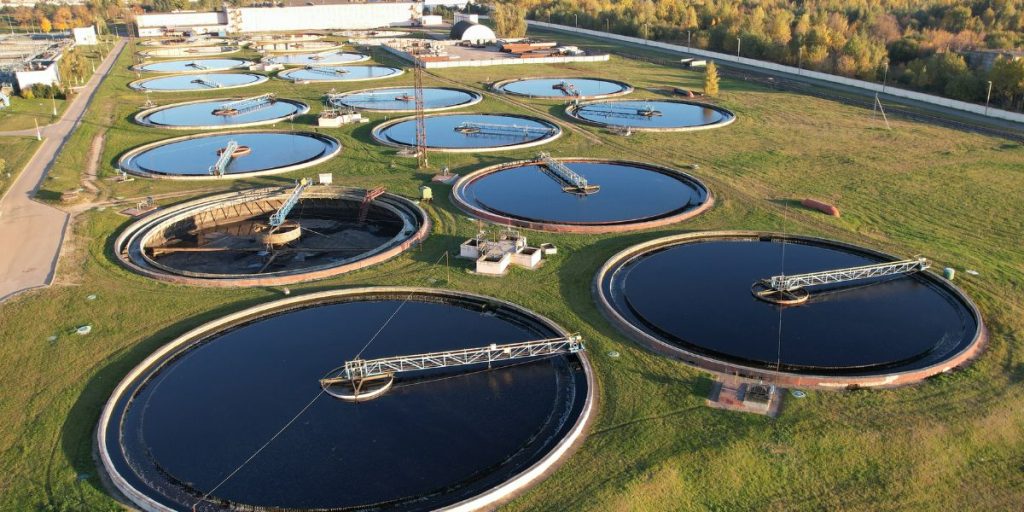
Industrial facilities generating process effluents, abrasive slurries, and sewage discharge face a pipeline engineering challenge that standard utility specifications rarely address adequately. HDPE fittings for industrial waste fluid transport systems must perform reliably under conditions that combine chemical aggression, abrasive solids, elevated loads, and regulatory scrutiny into a single operational environment. Selecting the wrong material or jointing system in these applications does not simply result in premature maintenance: it creates environmental liability, regulatory exposure, and safety hazards that extend well beyond the pipeline itself. This article examines the specific demands of industrial waste fluid transport across sectors including industry, mining, sewage, and submarine applications, and explains why polyethylene systems have become the technical reference for engineers specifying these installations.
Challenges in Transporting Industrial Waste Fluid Systems
Industrial waste fluid transport is one of the most technically demanding pipeline applications in any facility. Unlike potable water or natural gas distribution, where the fluid properties are well characterised and consistent, industrial effluent streams are highly variable. Their chemical composition changes with production cycles, their temperature fluctuates with process conditions, and their solids content varies with upstream operations. A pipeline system specified for this environment must perform reliably across the full range of operating conditions, not simply at the design point.
The consequences of system failure in industrial waste fluid transport are more severe than in most other pipeline applications. A leak in a water distribution system is a service disruption. A leak in an industrial effluent system carrying abrasive slurries, heavy metal solutions, or high-pH process water is an environmental incident with regulatory, financial, and reputational consequences that can extend years beyond the event itself. This asymmetry between the cost of correct specification and the cost of failure makes material and jointing system selection critically important in industrial waste fluid transport design.
Chemical Aggression and Abrasion in Industrial Waste Fluid Systems
The chemical environment inside an industrial waste fluid pipeline is determined by the upstream processes generating the effluent. Mining operations produce acidic leachate streams and alkaline tailings slurries that attack metallic piping through combined corrosion and abrasion mechanisms. Sewage systems carry effluents with variable pH, hydrogen sulphide generation, and biological activity that degrade conventional metallic linings over time. Industrial process water systems used for cooling, rinsing, or equipment cleaning generate waste streams with elevated mineral content and temperature that accelerate corrosion in metallic alternatives.
Abrasion is a parallel challenge in systems carrying solids in suspension. Mining slurries carry abrasive particles that erode pipe walls and fittings over time, with wear rates that increase significantly at bends, reducers, and tee connections where flow direction changes concentrate particle impingement. In metallic systems, abrasion accelerates corrosion at worn areas, creating a combined degradation mechanism that reduces wall thickness and structural capacity faster than either mechanism acting alone. The smooth internal surface of HDPE pipelines reduces turbulence at the wall boundary, limiting the energy available for particle impingement and reducing abrasive wear rates compared to corroded metallic surfaces with irregular internal geometry.
HDPE Performance in Harsh Industrial Waste Fluid Systems
The performance of HDPE fittings in industrial waste fluid transport systems is founded on the material properties of high-density polyethylene at the molecular level. PE100RC grades provide a combination of chemical resistance, mechanical strength, and long-term stress crack resistance that is unmatched by metallic alternatives across the range of industrial effluent conditions encountered in mining, sewage, industrial, and submarine applications.
Chemical Resistance and Durability of HDPE Waste Fluid Fittings
High-density polyethylene is resistant to a broad range of industrial fluids, including mineral acids, alkalis, and most inorganic salt solutions encountered in mining and industrial process environments. This resistance is a property of the polymer structure itself: the non-polar carbon-hydrogen backbone of polyethylene does not react with ionic species in aqueous solution, and the high crystallinity of PE100 grade material limits the diffusion of aggressive molecules into the polymer matrix. The practical result is a material that maintains its mechanical properties in fluid environments that would rapidly degrade metallic alternatives through corrosion.
PE100RC grade fittings provide an additional performance advantage in buried and structurally loaded applications. The enhanced resistance to slow crack growth and environmental stress cracking that defines the RC designation is particularly relevant in industrial waste fluid systems, where pipelines may be subject to sustained mechanical loading from soil pressure, thermal cycling, or the dynamic loads transmitted by pumping systems. A fitting that maintains its structural integrity under combined chemical and mechanical stress over a service life of 50 years or more represents a fundamentally different lifecycle cost proposition compared to a metallic fitting requiring inspection and replacement on a shorter cycle.
The temperature rating of HDPE fittings must be considered carefully in industrial waste fluid applications where process temperatures are elevated. Plastitalia’s system design consultancy service provides support for pressure class selection and thermal expansion analysis in elevated temperature industrial applications.
Leak Prevention in Hazardous Industrial Waste Fluid Applications
Leak prevention is the primary performance requirement in any pipeline system carrying industrial process effluents. The consequences of leakage in these applications, environmental contamination, regulatory sanctions, facility shutdown, and remediation costs, make zero-leakage performance a design requirement rather than an operational aspiration. The jointing system is the most critical element of leak prevention performance, as connections and transitions are where conventional systems most commonly fail over time.
Electrofusion and butt fusion joints in HDPE systems create a monolithic pipeline structure with no mechanical sealing elements. The fusion process bonds the polyethylene molecules across the joint interface, producing a connection whose tensile strength and pressure resistance are equivalent to or greater than the parent pipe material. There are no gaskets to degrade, no compression fittings to relax under sustained load, and no threaded connections to corrode during maintenance cycles. The joint either performs at full specification or presents an identifiable defect detectable during pressure testing before the system enters service.
For industrial waste fluid applications where additional assurance is required, electrofusion saddle fittings with indicator pins provide visual confirmation that the fusion zone has reached the correct temperature and that the joint has formed correctly. The automatic parameter logging of modern electrofusion control units creates a digital record of every joint executed, supporting the documentation requirements of environmental compliance programmes and providing a traceable installation record for the facility’s asset management system.
Designing Safe Industrial Waste Fluid Systems with HDPE Fittings
The design of safe and compliant industrial waste fluid transport systems using HDPE fittings requires an integrated approach that addresses fluid properties, system pressure and temperature, installation environment, and regulatory requirements within a coherent engineering specification. Each of these factors influences the selection of pipe grade, fitting geometry, pressure class, and jointing method, and the interactions between them must be understood to produce a system that performs reliably across its full design life.
Reducing Environmental Risk with HDPE Industrial Waste Fluid Systems
The environmental risk profile of an industrial waste fluid transport system is determined by the probability of leakage and the consequence of that leakage reaching a sensitive receptor. Reducing the probability of leakage through material selection and joint design is the primary engineering lever available to system designers. HDPE systems with fusion-welded joints address this directly, removing the mechanical failure modes that dominate the leakage statistics of conventional industrial piping systems.
For applications where the consequence of leakage is particularly severe, routing the pipeline within a containment channel or protective sleeve provides an additional layer of environmental protection. The leak detection capability of these configurations provides early warning of primary pipe integrity loss before contaminants reach the environment, supporting the proactive compliance management that regulators increasingly expect from industrial facility operators.
Plastitalia supports industrial facility engineers in the specification of HDPE waste fluid transport systems through system design consultancy covering fluid compatibility assessment, pressure class selection, and thermal expansion analysis. The full range of electrofusion and spigot fittings, including saddle fittings for lateral connections and transition fittings is available across all standard diameters and pressure classes to support projects of any scale in the industry, mining, sewage, and submarine application sectors.
Conclusions
Industrial waste fluid transport is an application where the cost of inadequate specification is measured not in maintenance cycles but in environmental incidents and regulatory consequences. HDPE fittings for industrial waste fluid transport systems provide the chemical resistance, joint integrity, and long-term durability that these applications require, across the range of effluent conditions and installation environments encountered in industrial, mining, sewage, and submarine projects.
For engineers specifying new industrial effluent systems or upgrading existing installations, PE100RC fittings with electrofusion jointing represent the current standard of practice for demanding fluid transport applications. Plastitalia’s product range and system design consultancy service support specification and procurement across the full scope of industrial waste fluid transport requirements.