



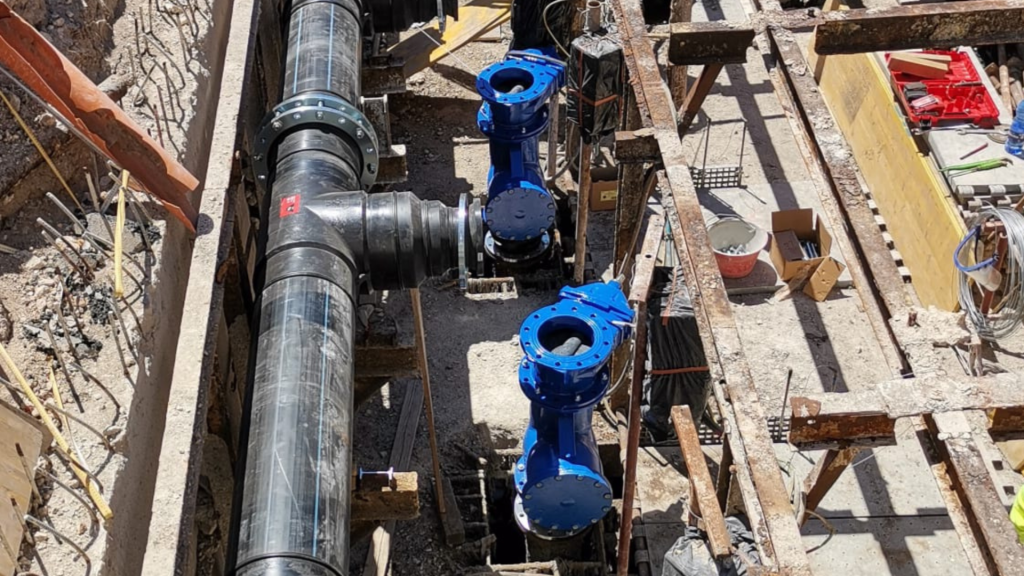
Global infrastructure is entering a new phase of complexity. Climate change is no longer a future concern but a present reality that directly impacts the performance, safety, and longevity of utility systems. Extreme weather events, shifting environmental conditions, and increased operational demands are forcing municipalities and industrial operators to rethink how infrastructure is designed and maintained.
In this context, HDPE fittings for infrastructure resilience and climate adaptation represent a critical solution. Their material properties and system performance enable utility operators to build networks that withstand environmental stress while maintaining efficiency and reliability. This article explores the key challenges affecting modern utility systems, the role of HDPE as a resilient material, and how to design infrastructure capable of adapting to climate pressures over time.
Climate Challenges for Utility Systems
Utility systems are increasingly exposed to unpredictable and extreme environmental conditions. Traditional materials often struggle to maintain performance under these stresses, leading to higher maintenance costs, system failures, and operational risks.
Flooding, Temperature Variations, Ground Movement
Flooding events are becoming more frequent and intense, placing significant pressure on underground utility systems. Water infiltration can compromise pipeline integrity, especially in systems with mechanical joints or corrosion-prone materials. HDPE fittings offer a fully welded, leak-free solution that prevents infiltration and protects system performance even in saturated environments.
Temperature fluctuations also play a critical role in infrastructure degradation. Materials such as metal and rigid plastics expand and contract under thermal stress, which can lead to cracks, joint failures, or long-term fatigue. HDPE fittings, on the other hand, maintain structural integrity across a wide temperature range, making them suitable for both hot and cold climates.
Ground movement, whether caused by seismic activity, soil settlement, or heavy traffic loads, represents another major challenge. Rigid systems often fail under these conditions, while HDPE systems can absorb and adapt to movement without compromising performance. This flexibility is essential for maintaining continuity in urban and industrial utility systems.
Increasing Stress on Infrastructure
Modern infrastructure is subject to increasing operational demands. Population growth, urban expansion, and industrial activity are placing higher loads on water, gas, and industrial systems. At the same time, regulatory frameworks are becoming stricter, requiring higher safety standards and environmental compliance.
These factors create a scenario where infrastructure must deliver more while facing greater risks. HDPE fittings for infrastructure resilience and climate adaptation support this transition by offering high resistance to pressure, environmental stress, and long-term degradation.
Their ability to maintain performance under demanding conditions reduces the likelihood of system failure and ensures consistent service delivery, which is critical for both public utilities and industrial operations.
HDPE as a Resilient Material
Material selection is a key factor in building resilient infrastructure. HDPE stands out as a solution that combines mechanical strength, flexibility, and chemical resistance, making it ideal for climate-adaptive systems.
Flexibility and Crack Resistance
One of the defining characteristics of HDPE is its flexibility. Unlike rigid materials, HDPE can bend without breaking, allowing it to adapt to ground movement and external loads. This property significantly reduces the risk of cracks, which are a common cause of leaks and system failures in traditional pipelines.
HDPE fittings enhance this performance through fusion welding techniques that create homogeneous joints. These joints eliminate weak points and ensure that the entire system behaves as a single, continuous structure. This is particularly important in environments where stress conditions are unpredictable.
Crack resistance is another critical advantage. HDPE materials, especially PE100 grades, are designed to resist slow crack growth and fatigue over time. This ensures long-term reliability even under constant pressure and environmental stress.
Performance in Extreme Conditions
Infrastructure systems must operate reliably across a wide range of environmental conditions. HDPE fittings for infrastructure resilience and climate adaptation are engineered to perform in extreme scenarios, including high humidity, aggressive soils, and exposure to chemicals.
Their resistance to corrosion eliminates the need for protective coatings or additional treatments, reducing both installation complexity and maintenance requirements. This makes HDPE an ideal choice for applications where environmental conditions are particularly challenging.
In addition, HDPE maintains its mechanical properties over time, even when exposed to UV radiation or temperature variations. This stability ensures consistent performance throughout the lifecycle of the system, supporting long-term infrastructure planning.
Building Climate-Resilient Utility Systems
Designing infrastructure for climate resilience requires a holistic approach. Material selection, system design, and installation techniques must all work together to create systems that can adapt to changing conditions while maintaining performance.
Long-Term Reliability and Sustainability
HDPE fittings for infrastructure resilience and climate adaptation provide a strong foundation for long-term system reliability. Their durability reduces the need for frequent repairs or replacements, lowering operational costs and minimizing disruptions.
From a sustainability perspective, HDPE systems contribute to reduced environmental impact. Leak-free joints prevent water loss and contamination. These factors align with global sustainability goals and support regulatory compliance.
For utility operators, investing in HDPE solutions means adopting infrastructure that delivers consistent performance over decades. This long-term reliability is essential for managing resources efficiently and ensuring service continuity.
Reducing Infrastructure Vulnerability
Infrastructure vulnerability is a growing concern, particularly in regions exposed to extreme weather events. Failures in utility systems can have significant economic, environmental, and social consequences.
HDPE fittings help reduce this vulnerability through their ability to withstand external stress and maintain system integrity. Their flexibility allows systems to adapt to changing conditions, while their resistance to corrosion and chemical attack ensures long-term durability.
In addition, the use of fusion welding techniques eliminates potential leak points, enhancing overall system safety. This is particularly important in applications such as gas distribution, where leaks can pose serious risks.
By integrating HDPE fittings into utility systems, operators can create infrastructure that is not only more resilient but also better prepared to handle future challenges.
Why Choose Plastitalia for Climate-Resilient Infrastructure
Selecting the right partner is essential when developing infrastructure projects focused on resilience and adaptation. Plastitalia offers a complete range of HDPE fittings engineered to meet the highest performance standards in demanding environments.
Each fitting is designed to ensure reliability, ease of installation, and compatibility with modern utility systems. Strict quality control processes guarantee consistent performance, while technical support helps clients optimize system design and implementation.
Plastitalia’s expertise in polyethylene solutions allows contractors, engineers, and utility operators to approach complex projects with confidence. The combination of high-quality products and dedicated support ensures that every system is built to withstand environmental challenges and deliver long-term value.
Conclusion: Investing in Resilient Infrastructure Systems
The impact of climate change on infrastructure is undeniable. Utility systems must evolve to meet new challenges, ensuring reliability, safety, and sustainability in increasingly complex environments.
HDPE fittings for infrastructure resilience and climate adaptation provide a forward-looking solution that addresses these needs. Their material properties, combined with advanced installation techniques, enable the creation of systems that can adapt to environmental stress while maintaining performance.
For B2B stakeholders, investing in HDPE is not just a technical choice. It is a strategic decision that supports long-term infrastructure resilience, reduces operational risks, and enhances overall system efficiency.