



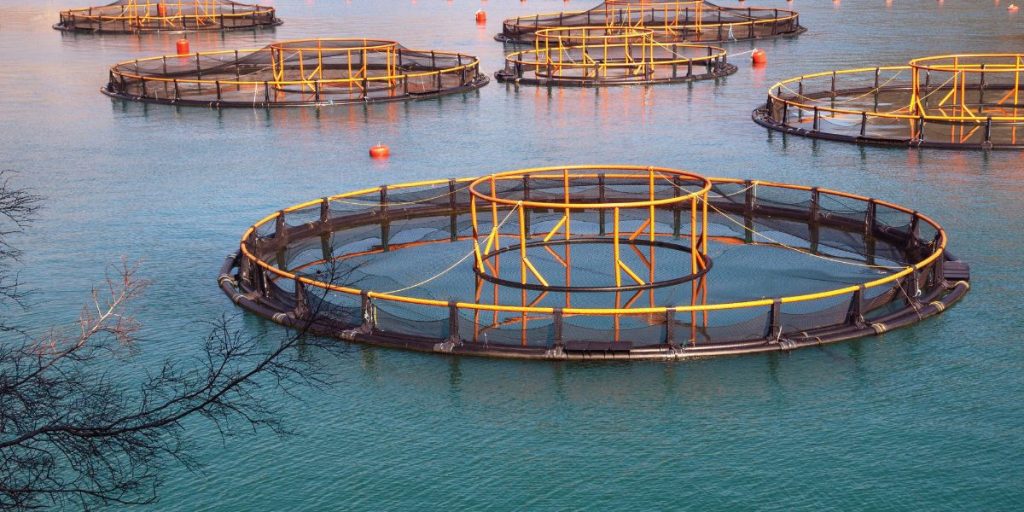
HDPE Fittings for Aquaculture Intake and Discharge Pipelines play a critical role in modern fish farming and marine production facilities. Aquaculture operators rely on continuous water exchange, controlled intake, and safe discharge to maintain water quality, oxygen levels, and biological balance. In this context, pipeline integrity is directly linked to operational stability and environmental compliance.
Aquaculture systems operate in demanding conditions. Intake lines are often submerged in seawater or freshwater sources, while discharge pipelines transport effluents that may contain suspended solids, organic matter, or treatment residues. HDPE fittings manufactured from PE100 RC material provide the structural integrity, chemical resistance, and long-term reliability required in these environments.
Plastitalia supports aquaculture infrastructure projects with a wide range of electrofusion and butt fusion fittings engineered for hydraulic efficiency, pressure stability, and corrosion resistance. These solutions allow engineers and contractors to design intake and discharge systems that remain stable over extended operational cycles.
Safe Water Intake from marine and freshwater sources
Water intake represents the starting point of any aquaculture operation. The reliability of this phase determines the quality of the entire production cycle. HDPE Fittings for Aquaculture Intake and Discharge Pipelines ensure stable connections between offshore intake points, pumping stations, filtration systems, and distribution manifolds.
Corrosion resistance in seawater environments
Marine environments expose pipeline components to salt, biofouling, and fluctuating temperatures. Traditional metallic materials require protective coatings and ongoing maintenance to resist corrosion. HDPE fittings, in contrast, are inherently resistant to saltwater exposure.
PE100 RC material density supports long-term chemical stability without oxidation or galvanic corrosion. This eliminates the need for additional protective treatments and reduces lifecycle costs.
Structural integrity in submerged installations
Intake pipelines often cross uneven seabeds or riverbeds. HDPE Fittings for Aquaculture Intake and Discharge Pipelines maintain joint integrity even when exposed to minor seabed movement or underwater currents.
Electrofusion and butt fusion joints create a monolithic structure that distributes stress evenly across the pipe-fittings interface. This continuity prevents leakage at connection points, even in dynamic marine environments.
Abrasion resistance in discharge lines
Discharge pipelines transport treated water, sludge residues, and organic particles back to the environment or to treatment facilities. Abrasive particles can accelerate wear in rigid or brittle materials. HDPE fittings offer a high level of abrasion resistance, making them suitable for these conditions.
Resistance to suspended solids and organic matter
Effluent streams often contain sand, feed residues, biological solids, and treatment byproducts. Over time, these materials can erode pipeline interiors. PE100 RC material absorbs mechanical stress without cracking or surface degradation.
This abrasion resistance helps maintain internal diameter consistency, preserving flow capacity and reducing energy consumption in pumping systems.
Minimizing leakage and environmental risk
Leak prevention is essential in aquaculture facilities subject to environmental regulations. Fully fused HDPE joints eliminate weak mechanical interfaces such as gaskets or threaded connections.
This approach supports containment integrity and reduces the risk of unintended discharge into surrounding ecosystems. For operators, this contributes to regulatory compliance and protects investment in environmental safeguards.
Long-Term performance in continuous flow environments
Aquaculture operations function continuously. Intake and discharge systems rarely stop, and components must endure constant hydraulic and mechanical stress. HDPE Fittings for Aquaculture Intake and Discharge Pipelines are designed to support long operational lifespans in such conditions.
Fatigue resistance under repeated load cycles
Continuous pumping generates repeated pressure cycles. PE100 RC material offers high resistance to slow crack growth and fatigue. This characteristic ensures that joints remain stable under prolonged mechanical stress.
Engineers designing long-term aquaculture systems can rely on predictable performance without frequent component replacement.
Reduced maintenance and lifecycle costs
Durability reduces the need for intervention. HDPE systems do not require internal coatings, cathodic protection, or corrosion mitigation programs. Maintenance teams can focus on filtration and biological management rather than pipeline repairs.
Over the full lifecycle of an aquaculture facility, this translates into measurable cost efficiency and improved operational continuity.
Engineering Considerations for Aquaculture Pipeline Design
Selecting HDPE Fittings for Aquaculture Intake and Discharge Pipelines involves evaluating hydraulic loads, environmental exposure, and installation constraints.
Engineers should consider:
- PN rating selection based on pump pressure and static head
- SDR compatibility between pipe and fittings
- Fusion method selection for submerged or shore-based installation
- Anchoring strategies for underwater segments
Plastitalia provides technical support to assist with these evaluations. The company’s product portfolio includes electrofusion fittings, butt fusion fittings, and custom components engineered for marine and freshwater applications.
Sustainability and environmental responsibility
Aquaculture operators must balance productivity with environmental stewardship. Pipeline materials contribute to this balance.
HDPE Fittings for Aquaculture Intake and Discharge Pipelines support sustainability through:
- Long service life
- Reduced leakage risk
- Lower maintenance intervention
The durability of PE100 RC material limits material waste and replacement frequency. Efficient flow characteristics reduce pump energy demand. These factors align with long-term environmental strategies in modern aquaculture.
Conclusion: reliable infrastructure for sustainable aquaculture
HDPE Fittings for Aquaculture Intake and Discharge Pipelines provide a structurally sound and future-oriented solution for marine and freshwater farming systems. Corrosion resistance, abrasion tolerance, and fatigue stability ensure that intake and discharge systems operate reliably under continuous load.
For engineers and operators, material performance directly influences productivity, environmental compliance, and investment protection. Plastitalia delivers fittings engineered to meet these demands, supporting safe water intake, secure effluent discharge, and long-term operational efficiency in aquaculture facilities worldwide.