



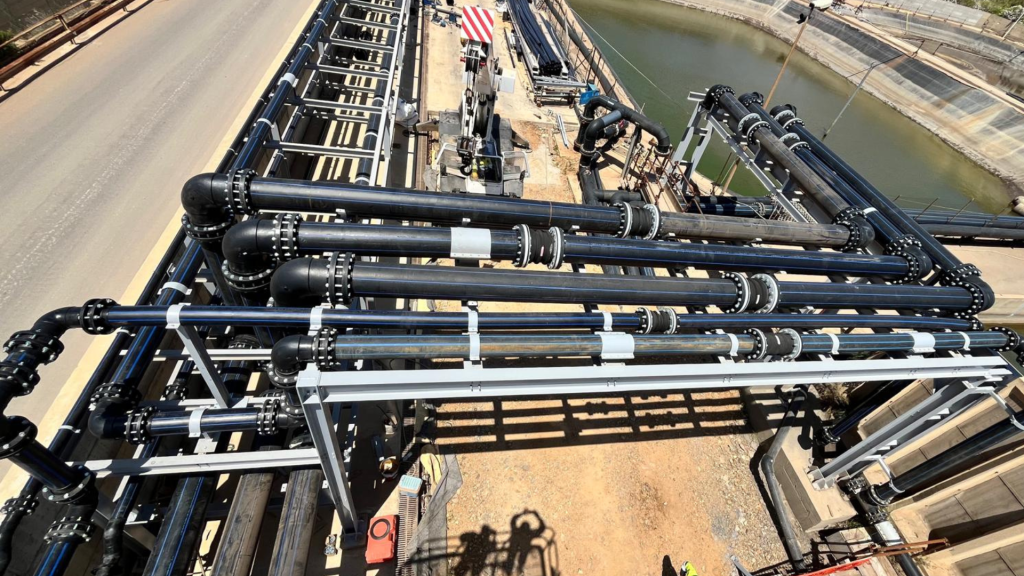
Industrial cooling water systems are critical assets inside manufacturing plants, energy facilities, data centers, and process industries. Their reliability directly affects uptime, safety, and operational costs. HDPE Fittings for Cooling Water Systems in Industrial Facilities provide engineers with a durable and technically stable alternative to traditional metallic components, combining corrosion resistance, hydraulic efficiency, and long service life.
This article explains how PE100 HDPE fittings, protect against chemical and environmental degradation, and reduce maintenance in continuous-operation plants. It also clarifies why electrofusion joints and engineered polyethylene systems are increasingly specified for modern industrial cooling infrastructures.
For designers, contractors, and plant managers, selecting the right piping components is not only a material decision. It is a long-term strategy that impacts lifecycle cost, reliability, and operational continuity.
Corrosion Resistance in open and closed cooling systems with HDPE Fittings
Corrosion remains one of the primary causes of failure in traditional cooling water systems. Open towers expose piping to oxygen and contaminants, while closed loops circulate chemically treated water. Both environments can degrade metal components.
HDPE eliminates corrosion at the material level. Polyethylene does not oxidize, rust, or suffer galvanic reactions. This makes HDPE fittings for cooling water systems ideal for aggressive industrial environments.
Resistance to chemical treatments and additives
Cooling water frequently contains:
- biocides
- anti-scaling agents
- corrosion inhibitors
- glycol or other chemical additives
PE100 maintains structural integrity in contact with these substances. The inner surface remains smooth and chemically stable, preventing degradation or scaling that could reduce flow efficiency.
This resistance supports consistent system performance over time and minimizes the need for replacements.
Protection against environmental exposure
Industrial facilities often include both indoor and outdoor piping sections. UV radiation, humidity, and atmospheric pollutants accelerate corrosion in metallic systems.
HDPE fittings incorporate stabilizers that protect against environmental stress. Even exposed installations retain mechanical strength and sealing performance. This durability extends service life and reduces unexpected failures.
For facility managers, fewer failures translate directly into lower downtime and safer operations.
Reducing Maintenance in continuous operation plants with HDPE Fittings
Continuous operation plants cannot afford frequent shutdowns for repairs. Cooling water systems must operate reliably for years with minimal intervention. Every maintenance stop impacts productivity and revenue.
HDPE fittings significantly reduce maintenance requirements thanks to their monolithic joints and corrosion-free behavior. Once properly welded, connections remain leak-free without periodic tightening or replacement of gaskets.
Leak-Free Electrofusion and butt fusion joints
Electrofusion and butt fusion create permanent molecular bonds between pipe and fitting. These joints:
- eliminate gaskets and mechanical seals
- prevent infiltration and exfiltration
- maintain uniform internal diameter
- ensure consistent pressure performance
The joint becomes as strong as the pipe itself. This reduces common failure points typically found in threaded or flanged systems.
For operators, fewer leaks mean lower water loss, improved efficiency, and reduced environmental risk.
Simplified inspection and lifecycle management
HDPE systems support modern maintenance strategies. Their durability allows longer inspection intervals and fewer emergency interventions. Surfaces resist scaling and biological buildup, which simplifies cleaning operations.
Because replacements are less frequent, lifecycle costs decrease significantly. Engineers can plan long-term investments with greater confidence.
This economic advantage often offsets the initial installation cost, making polyethylene systems highly competitive for industrial applications.
Engineering efficiency and system integration with HDPE Fittings
Beyond material properties, HDPE fittings contribute to overall system efficiency. Their lightweight nature simplifies handling, transportation, and installation. Crews require fewer lifting tools and less heavy equipment.
Faster installation reduces labor time and improves project schedules. Electrofusion equipment ensures repeatable and controlled welding parameters, supporting consistent quality across large sites.
Designers also benefit from flexibility in routing. HDPE adapts to complex layouts and tight mechanical rooms without excessive fittings or structural modifications. This adaptability optimizes space usage inside crowded industrial facilities.
The result is a more streamlined cooling water system that integrates smoothly with pumps, heat exchangers, and plant utilities.
Conclusion: reliable cooling water systems start with the right fittings
HDPE Fittings for Cooling Water Systems in Industrial Facilities provide a technically sound solution for modern plants that demand reliability, safety, and efficiency. Corrosion resistance, and permanent welded joints protect the infrastructure from common failure mechanisms that affect traditional materials.
For engineers and project managers, polyethylene systems represent more than an alternative. They offer a strategic improvement in lifecycle performance. Reduced maintenance, longer service life, and consistent hydraulic behavior translate into lower operating costs and improved plant uptime.
Plastitalia supports this approach with a comprehensive range of PE100 fittings, engineered solutions, and technical expertise. Partnering with a specialist manufacturer helps ensure that every cooling water system meets the highest standards of performance and durability.
When continuous operation is essential, choosing HDPE means choosing confidence, efficiency, and long-term value.