



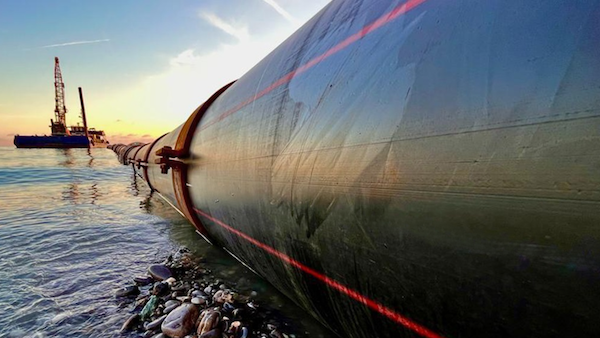
HDPE Fittings for Subsea Water Pipeline applications play a critical role in modern marine and coastal infrastructure. Subsea pipelines are widely used to transport seawater for industrial cooling, desalination plants, aquaculture systems. In these environments, materials must withstand constant exposure to saltwater, hydrostatic pressure, and mechanical stress.
HDPE fittings, manufactured from PE100 RC material, provide a reliable solution for engineers designing subsea systems. Their corrosion resistance, flexibility, and structural integrity make them particularly suitable for long-term submerged applications. Unlike traditional materials, HDPE does not suffer from electrochemical degradation, which is a key factor in marine environments.
This article explores how HDPE fittings support subsea water pipeline systems, focusing on pressure resistance, electrofusion reliability, and long-term lifecycle advantages compared to conventional pipeline materials.
Pressure Resistance in Submerged Pipelines
Subsea pipelines operate under continuous hydrostatic pressure, which increases with depth. HDPE Fittings for Subsea Water Intake and Outfall Systems are designed to maintain structural stability under these demanding conditions.
Hydrostatic Load Management in HDPE Fittings for Subsea Water Intake
When pipelines are installed below the water surface, external pressure acts uniformly across the pipe and fittings. HDPE materials respond differently compared to rigid alternatives. Their flexibility allows them to distribute stress without creating localized failure points.
The PE100 material structure supports pressure resistance through its density and molecular configuration. Engineers calculate pressure ratings based on PN and SDR values, ensuring compatibility between pipes and fittings. Correct sizing guarantees that the system maintains its integrity even at significant depths.
Electrofusion Reliability
Installation conditions are often complex. Limited accessibility, variable weather conditions, and constrained working spaces require connection methods that guarantee consistency and reliability. HDPE Fittings for Subsea Water Pipeline Systems rely on electrofusion technology to achieve this level of performance.
Controlled Jointing Process in HDPE Fittings for Subsea Water Pipeline
Electrofusion creates a homogeneous bond between the pipe and the fitting through controlled heating. Embedded resistance wires inside the fitting generate heat when electrical current is applied, melting the contact surfaces.
Once cooled, the joint becomes a continuous structure with no mechanical interfaces. This eliminates potential leak paths and ensures long-term sealing performance.
Digital control units regulate the electrofusion process, managing parameters such as:
- fusion time
- voltage input
- cooling duration
Installation Efficiency in Confined Environments
Subsea and nearshore installations often involve limited space and restricted access. Electrofusion fittings simplify installation procedures in these conditions.
Unlike mechanical connections, electrofusion does not require large equipment or complex assembly steps. This reduces installation time and minimizes the risk of errors during construction.
The ability to perform reliable joints in confined environments supports project efficiency and contributes to safer installation practices.
Lifecycle Advantages Over Traditional Materials
Material selection has a direct impact on the long-term performance and maintenance requirements of subsea systems. HDPE Fittings for Subsea Water Pipeline Systems offer several advantages compared to traditional materials such as steel or ductile iron.
Corrosion Resistance in Marine Environments
Seawater is highly aggressive toward metallic materials. Corrosion can lead to structural degradation, reduced flow capacity, and increased maintenance costs.
HDPE fittings are inherently resistant to corrosion. The material does not react with saltwater or most chemical agents present in marine environments. This ensures stable performance over extended periods without the need for protective coatings or cathodic protection systems.
Mechanical Flexibility and Impact Resistance
Subsea pipelines are subject to external forces such as currents, seabed movement, and installation stresses. HDPE fittings provide flexibility that allows the pipeline to adapt to these conditions.
Instead of cracking under stress, the material deforms within its elastic range and returns to its original shape. This behavior improves resistance to impact and reduces the likelihood of structural failure.
Reduced Maintenance and Operational Costs
Long-term infrastructure projects require materials that minimize maintenance interventions. HDPE fittings support this objective through their durability and resistance to environmental degradation.
Operators benefit from:
- reduced inspection frequency
- lower repair costs
- extended service life
These factors contribute to a lower total cost of ownership compared to traditional piping materials.
Conclusion
HDPE Fittings for Subsea Water Pipeline Systems provide a technically sound solution for subsea pipeline applications. Their resistance to pressure, corrosion, and mechanical stress makes them suitable for demanding marine environments.
Electrofusion technology ensures reliable, leak-free joints, even in challenging installation conditions. The flexibility and durability of PE100 RC material support long-term performance and reduce maintenance requirements.
For engineers and contractors involved in subsea infrastructure, HDPE fittings represent a strategic choice that enhances system reliability and operational efficiency. Investing in high-quality materials and proper installation practices ensures that subsea water intake systems deliver consistent performance over time.