



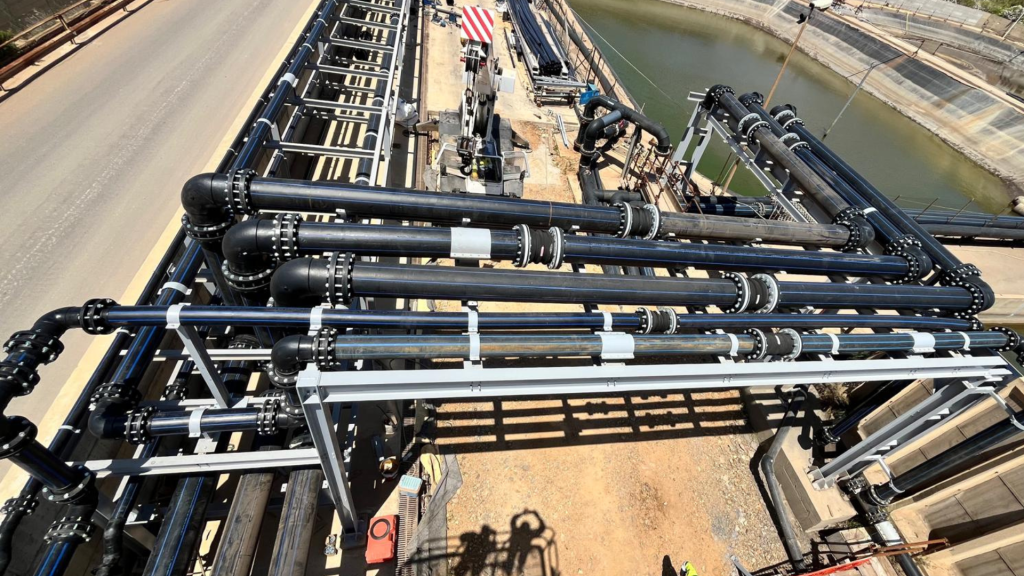
Municipal water rehabilitation projects are essential to restore the efficiency, reliability, and long-term performance of existing water supply infrastructure. Aging pipe systems, pressure instability, leakage points, and increasing water demand have placed utility operators under growing pressure to modernize distribution networks. PE100 electrofusion fittings are a strategic solution for these rehabilitation frameworks, enabling precise joint integrity, long operational lifespan, reduced maintenance complexity, and superior safety performance compared to traditional metallic solutions.
The adoption of PE100 electrofusion fittings supports both rehabilitation and modernization strategies. Government utilities, private network operators, and infrastructure engineering firms can extend asset longevity without needing full system replacement. This approach results in measurable operating cost reductions, improved hydraulic stability, and consistent system performance with lower environmental impact.
The unique characteristics of PE100 materials ensure high resistance to stress cracking, corrosion, and micro-leakage, making electrofusion the ideal joining method for restoring and upgrading water pipelines.
Extending service life of existing utility networks
Municipal water networks built decades ago were not designed to support current population density, seasonal consumption peaks, drought management strategies, or smart metering hydraulic models. Rehabilitation projects no longer focus solely on restoring existing flow: they must improve system capacity, reduce non-revenue water, deliver predictable pressure profiles, and maintain water quality across all nodes of distribution.
PE100 electrofusion fittings enable targeted replacement strategies rather than full system demolition. Aging network segments with highest leakage rates can be selectively removed and replaced, while adjacent structures remain in operation, minimizing service disruption. This precision approach allows contractors to optimize budget allocation and focus on critical areas where mechanical fatigue and corrosion are most present.
The mechanical properties of PE100 extend the operational life of rehabilitated lines beyond traditional pipe materials. The material remains dimensionally stable under dynamic soil movement, traffic vibration, and installation-induced stress. Over the lifecycle of a rehabilitated pipeline, this structural resilience results in fewer emergency interventions, longer time between maintenance cycles, and reduced total cost of ownership.
PE100 Material characteristics supporting long-term utilities performance
PE100 material is engineered to deliver consistent tensile strength, controlled flexibility, and dimensional uniformity across all production lots.
Key performance benefits in rehabilitation include:
- oxidative stability supporting decades of operation
- resistance to mineralized soils and chemically active environments
- immunity to corrosion
Water quality preservation is an additional advantage. PE100 does not release residues, micro-corrosive particles, or metallic ions into the water flow. This supports public utility targets linked to water purity, microbiological stability, and reduction of internal pipeline contamination risks.
Compatibility with mixed material systems during renewal
Many rehabilitation projects involve hybrid pipeline configurations where aging metallic lines coexist with new PE expansions. Electrofusion transition fittings in PE100 enable direct connection between PE sections and existing steel or ductile iron piping without mechanical couplers. This avoids leakage-prone adaptations and preserves hydraulic continuity across legacy and modern material infrastructures.
This versatility reduces engineering complexity and allows infrastructure owners to modernize networks in progressive stages. The transition from legacy materials to long-lasting PE100 becomes structured, cost-effective and technically controlled.
Joint integrity verification and process traceability
Each fusion cycle can be digitally monitored, logged, and documented. Electrofusion systems enable barcode scanning and automated parameter adjustment matching each fitting specification. This ensures repeatability even when performed by multiple operators over extended rehabilitation phases.
Traceability ensures:
- process documentation for each installed joint
- verification of correct fusion parameters
- reduction of human error
This contributes to improved asset management practices and lifecycle planning within water utility organizations.
Long-Term water conservation impact
Municipal rehabilitation is increasingly linked to environmental sustainability targets. Reducing water losses through secure electrofusion fittings generates measurable results in short time.
Every cubic meter saved contributes to energy savings in pumping stations, improved hydraulic balance, and better system performance under peak demand.
For utilities transitioning toward data-driven asset management, the structural reliability provided by PE100 electrofusion fittings becomes a cornerstone of measurable performance improvement, supporting more accurate forecasting, strategic planning and progressive transition toward Smart Water Infrastructure ecosystems.
Conclusion
Municipal rehabilitation requires materials and joining technologies capable of restoring long-term system performance, reducing leakage, and ensuring stable hydraulic operation under evolving demand conditions. PE100 electrofusion fittings provide a structurally reliable, corrosion-free and repeatable joining method for upgrading existing pipelines without the need for full demolition or disruptive excavation. Their compatibility with trenchless methods, hybrid networks, and transitional upgrades allows utilities and engineering partners to extend the service life of existing assets while optimizing investment and minimizing operational downtime.
The shift toward resilient, future-ready water infrastructure depends on solutions that combine durability, consistency, and technical precision. PE100 electrofusion fittings deliver these qualities, supporting municipalities and operators as they transition from reactive maintenance to strategic, sustainable rehabilitation planning.